Case Study

The Creative
Box Company

The Creative
Box Company

The Creative
Box Company

A packaging startup building growth partnerships for craft businesses.

A packaging startup building growth partnerships for craft businesses.

CLIENT

CLIENT

The Creative Box Company

The Creative Box Company

SCOPE

SCOPE

Brand Positioning

Brand Positioning

YEAR

YEAR

2025

2025

A Partnership Story
Told as a Commodity

A Partnership Story
Told as a Commodity

A Partnership Story
Told as a Commodity

From the outside, Creative Box Company could have looked like another packaging manufacturer. We didn't want the website to talk about just boxes. We didn't want the brand to be built around what the company produced, but what it actually meant to the businesses it served.

The founder wasn't operating like a manufacturer. He was showing up like a partner, offering design suggestions, thinking about how packaging evolves as a business scales from farmer's markets to wholesale accounts, genuinely caring about how his clients' products looked when they landed in someone's hands.

The gap wasn't in the work. The work was already different. The gap was that nobody could see it. The brand was primed to tell a commodity story while the founder lived a partnership story.

From the outside, Creative Box Company could have looked like another packaging manufacturer. We didn't want the website to talk about just boxes. We didn't want the brand to be built around what the company produced, but what it actually meant to the businesses it served.

The founder wasn't operating like a manufacturer. He was showing up like a partner, offering design suggestions, thinking about how packaging evolves as a business scales from farmer's markets to wholesale accounts, genuinely caring about how his clients' products looked when they landed in someone's hands.

The gap wasn't in the work. The work was already different. The gap was that nobody could see it. The brand was primed to tell a commodity story while the founder lived a partnership story.

From the outside, Creative Box Company could have looked like another packaging manufacturer. We didn't want the website to talk about just boxes. We didn't want the brand to be built around what the company produced, but what it actually meant to the businesses it served.

The founder wasn't operating like a manufacturer. He was showing up like a partner, offering design suggestions, thinking about how packaging evolves as a business scales from farmer's markets to wholesale accounts, genuinely caring about how his clients' products looked when they landed in someone's hands.

The gap wasn't in the work. The work was already different. The gap was that nobody could see it. The brand was primed to tell a commodity story while the founder lived a partnership story.

WHAT WE DISCOVERED

WHAT WE DISCOVERED

WHAT WE DISCOVERED

The Founder Was Telling
the Wrong Story

The Founder Was Telling
the Wrong Story

The Founder Was Telling
the Wrong Story

Through the process, the paradigm shift became clear: the founder was starting to tell the story of what his company could do. But his customers didn't need to hear about capabilities. They needed to hear that someone finally understood their problem.

Through the process, the paradigm shift became clear: the founder was starting to tell the story of what his company could do. But his customers didn't need to hear about capabilities. They needed to hear that someone finally understood their problem.

Through the process, the paradigm shift became clear: the founder was starting to tell the story of what his company could do. But his customers didn't need to hear about capabilities. They needed to hear that someone finally understood their problem.

What craft businesses actually wanted was something no one else was offering: a packaging partner who grows with you.

What craft businesses actually wanted was something no one else was offering: a packaging partner who grows with you.

What craft businesses actually wanted was something no one else was offering: a packaging partner who grows with you.

Not a supplier who fulfills orders, but someone who understands that packaging is part of a brand story, who thinks about presentation and unboxing experiences, who stays with a business as it scales. That was already who the founder was. The process named it, made it visible, and turned it into the entire positioning strategy.

Not a supplier who fulfills orders, but someone who understands that packaging is part of a brand story, who thinks about presentation and unboxing experiences, who stays with a business as it scales. That was already who the founder was. The process named it, made it visible, and turned it into the entire positioning strategy.

Not a supplier who fulfills orders, but someone who understands that packaging is part of a brand story, who thinks about presentation and unboxing experiences, who stays with a business as it scales. That was already who the founder was. The process named it, made it visible, and turned it into the entire positioning strategy.

From Order Fulfillment
to Growth Partner

From Order Fulfillment
to Growth Partner

From Order Fulfillment
to Growth Partner

The brand build took a unique approach. From the classic "order fulfillment" to "your ongoing packaging partner as you grow." That shift isn't semantic. It's psychological. One is a transaction. The other is a relationship.

The brand build took a unique approach. From the classic "order fulfillment" to "your ongoing packaging partner as you grow." That shift isn't semantic. It's psychological. One is a transaction. The other is a relationship.

The brand build took a unique approach. From the classic "order fulfillment" to "your ongoing packaging partner as you grow." That shift isn't semantic. It's psychological. One is a transaction. The other is a relationship.

Market research surfaced the language craft businesses actually use when they talk about their packaging frustrations: feeling like a number, suppliers who don't understand that presentation matters, no continuity as they scale, relationships that feel cold and transactional.

Market research surfaced the language craft businesses actually use when they talk about their packaging frustrations: feeling like a number, suppliers who don't understand that presentation matters, no continuity as they scale, relationships that feel cold and transactional.

Market research surfaced the language craft businesses actually use when they talk about their packaging frustrations: feeling like a number, suppliers who don't understand that presentation matters, no continuity as they scale, relationships that feel cold and transactional.

The messaging was built to speak directly to those frustrations, not with complex behavioral psychology, but with the simple clarity of naming what's broken and showing that someone already fixes it.

The messaging was built to speak directly to those frustrations, not with complex behavioral psychology, but with the simple clarity of naming what's broken and showing that someone already fixes it.

The messaging was built to speak directly to those frustrations, not with complex behavioral psychology, but with the simple clarity of naming what's broken and showing that someone already fixes it.

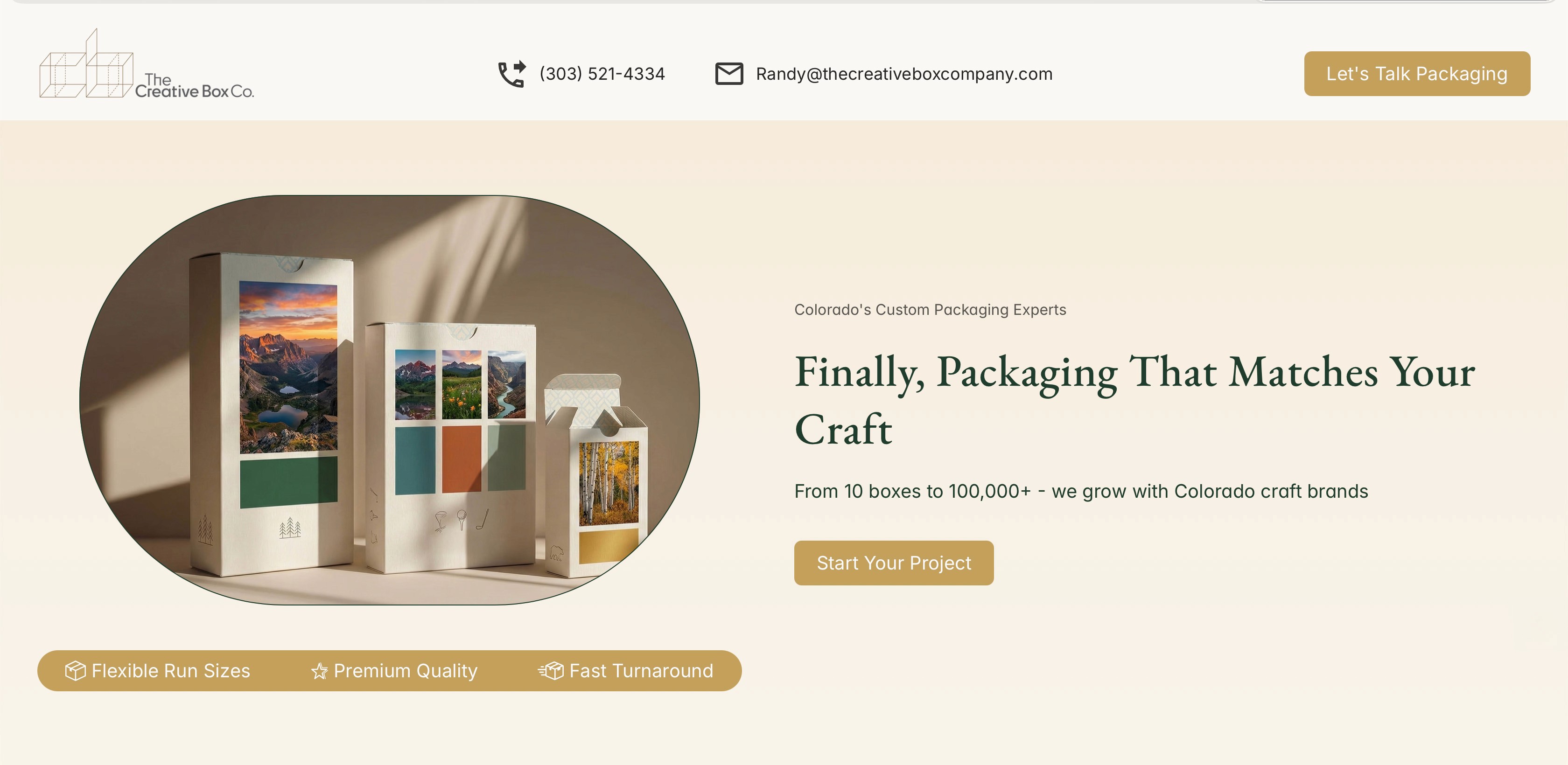
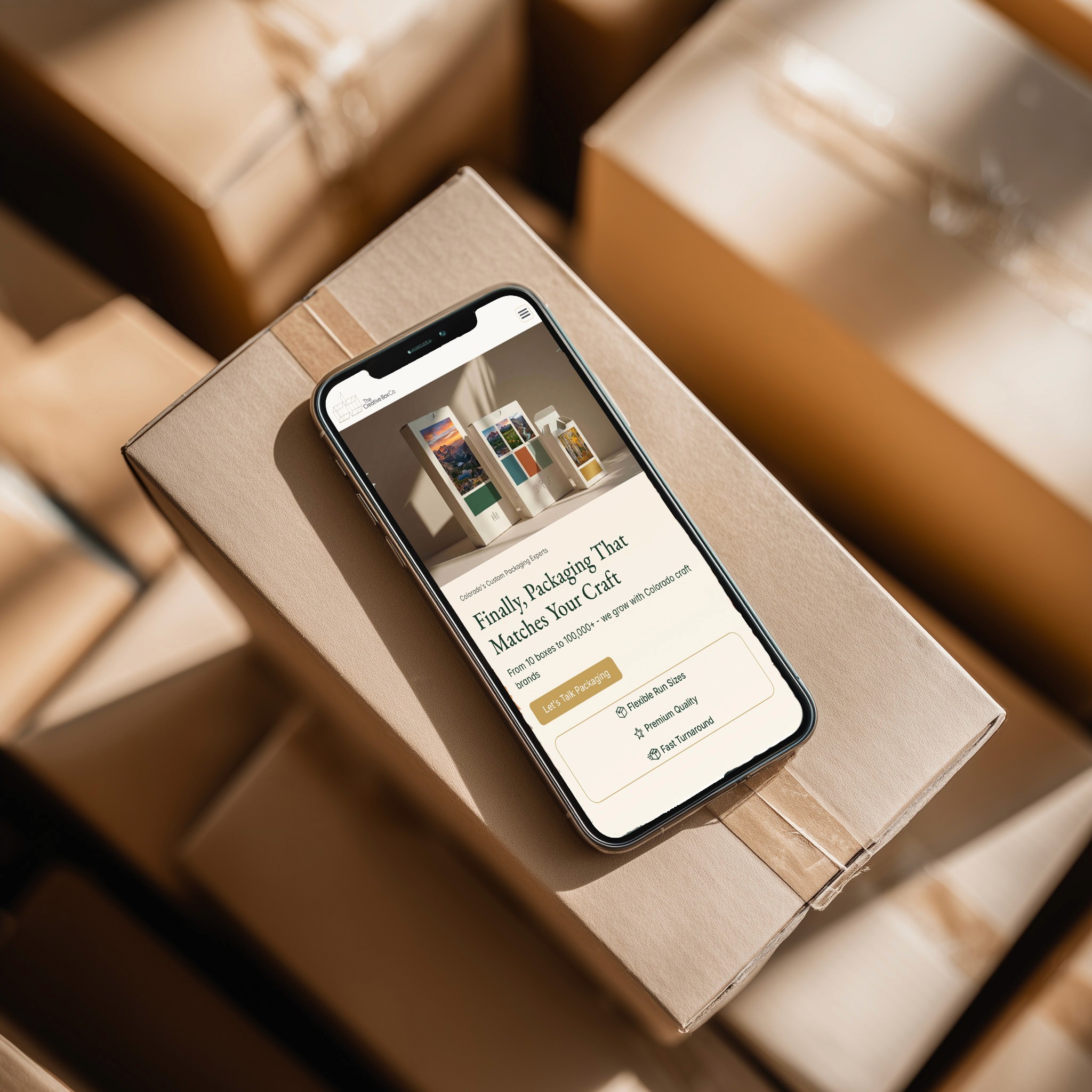
The website positioned partnership from the first interaction. Language that invites relationship, not just orders. The founder's story front and center. A process that emphasizes collaboration over fulfillment.

The website positioned partnership from the first interaction. Language that invites relationship, not just orders. The founder's story front and center. A process that emphasizes collaboration over fulfillment.

RESULT

RESULT

RESULT

The same business,
seen completely differently

The same business, seen completely differently

The same business,
seen completely differently

The founder stopped leading with what he makes and started leading with how he helps businesses grow. The shift from founder-centric to customer-centric changed the way every conversation landed, from "look at what we can produce" to "here's how I help your business show up beautifully at every stage."

The founder stopped leading with what he makes and started leading with how he helps businesses grow. The shift from founder-centric to customer-centric changed the way every conversation landed, from "look at what we can produce" to "here's how I help your business show up beautifully at every stage."

The founder stopped leading with what he makes and started leading with how he helps businesses grow. The shift from founder-centric to customer-centric changed the way every conversation landed, from "look at what we can produce" to "here's how I help your business show up beautifully at every stage."

Not a new company. The same founder, the same care, the same partnership instinct. But now the brand communicates what was always true: this isn't another packaging supplier. This is someone who's in your corner.

Not a new company. The same founder, the same care, the same partnership instinct. But now the brand communicates what was always true: this isn't another packaging supplier. This is someone who's in your corner.

Not a new company. The same founder, the same care, the same partnership instinct. But now the brand communicates what was always true: this isn't another packaging supplier. This is someone who's in your corner.

What's the story your
brand isn't telling?

What's the story your
brand isn't telling?

What's the story your
brand isn't telling?

Sometimes the gap between what you are and how you show up is smaller than you think, and naming it changes everything.

Sometimes the gap between what you are and how you show up is smaller than you think, and naming it changes everything.

Sometimes the gap between what you are and how you show up is smaller than you think, and naming it changes everything.